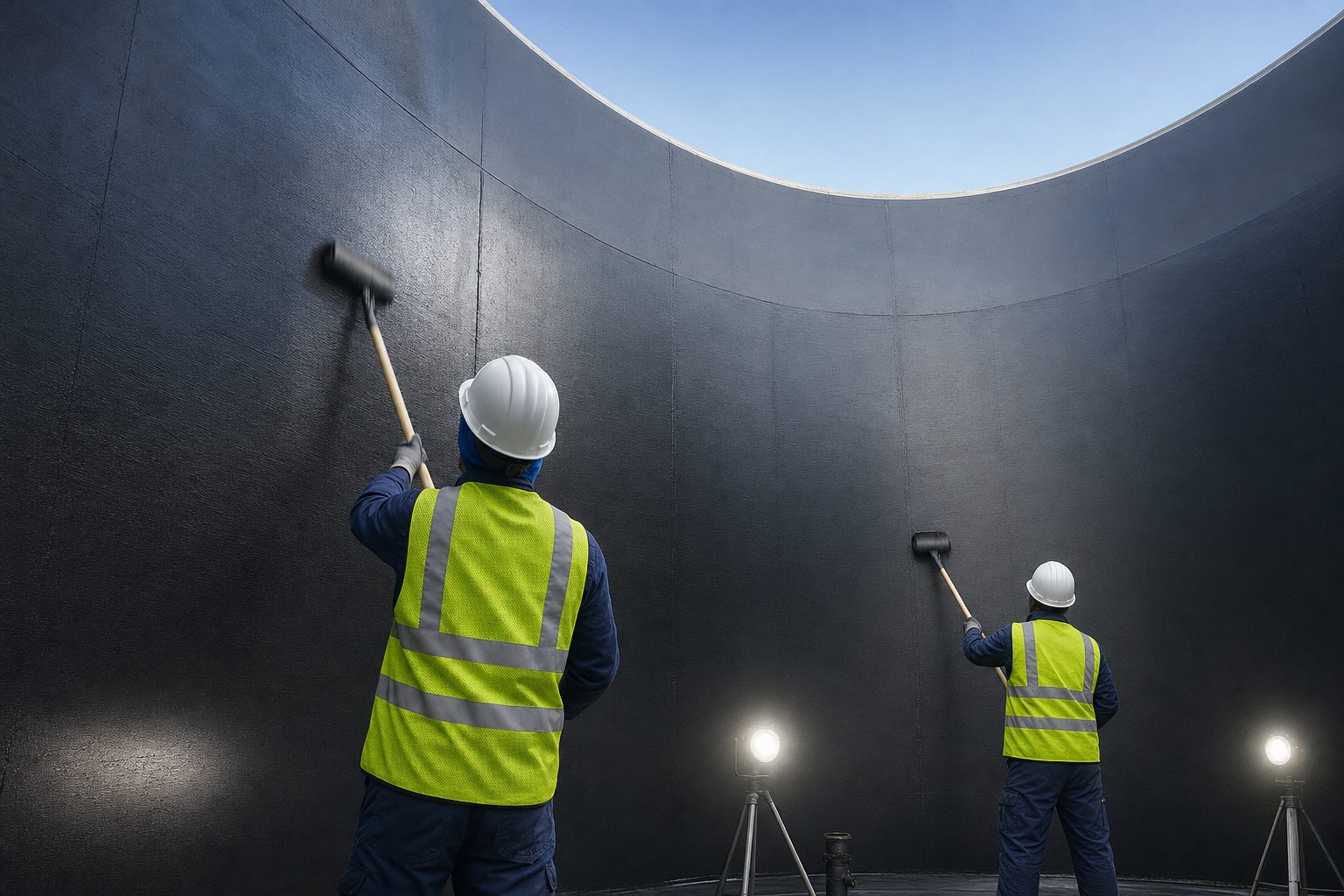
Rubber lining & conveyor systems
Protect vessels and chutes from abrasion and chemical attack, and keep material moving with splices and pulley packages built for production rates—not patch jobs.
Lining methods
Hot / cold
Conveyor classes
Heavy duty
Compound sourcing
Major mills
Field & shop
Both
What we deliver
- check_circleNatural and synthetic rubber linings for tanks, launders, hoppers, and hydrocyclone bodies subject to impact and sliding abrasion.
- check_circleHot vulcanized cures in our shop or yours when geometry and cure curves allow; cold bonding where site constraints demand it.
- check_circleConveyor belt splicing (finger, step), pulley lagging, and chute upgrades aligned to your tension and tonnage.
- check_circleStrip-out of failed linings, substrate repair, and reline with improved compound selection when service history supports it.
How we execute
-
01
Condition review
Thickness maps, hardness checks, and visual assessment of existing rubber or ceramic composite.
-
02
Surface prep
Concrete or steel prepared to manufacturer requirements; primers applied in controlled windows.
-
03
Build & cure
Sheet layout, skiving, and rolling or autoclave cycles executed to procedure with full batch trace.
-
04
Pressure / run test
Where applicable, we support hydro tests and dry runs before you return to full throughput.
Where this applies
Slurry pipelines, flotation and leach circuits, bulk materials handling, smelter acid plants, and ports where impact and carry-back destroy unprotected steel.
Related capabilities
Ready when your line is down
Emergency call-outs and planned shutdowns—same disciplined execution and documentation.
Talk to engineering